Fifteen Years After Egypt’s 2011 Revolution, Faith and Politics Continue to Shape a Generation
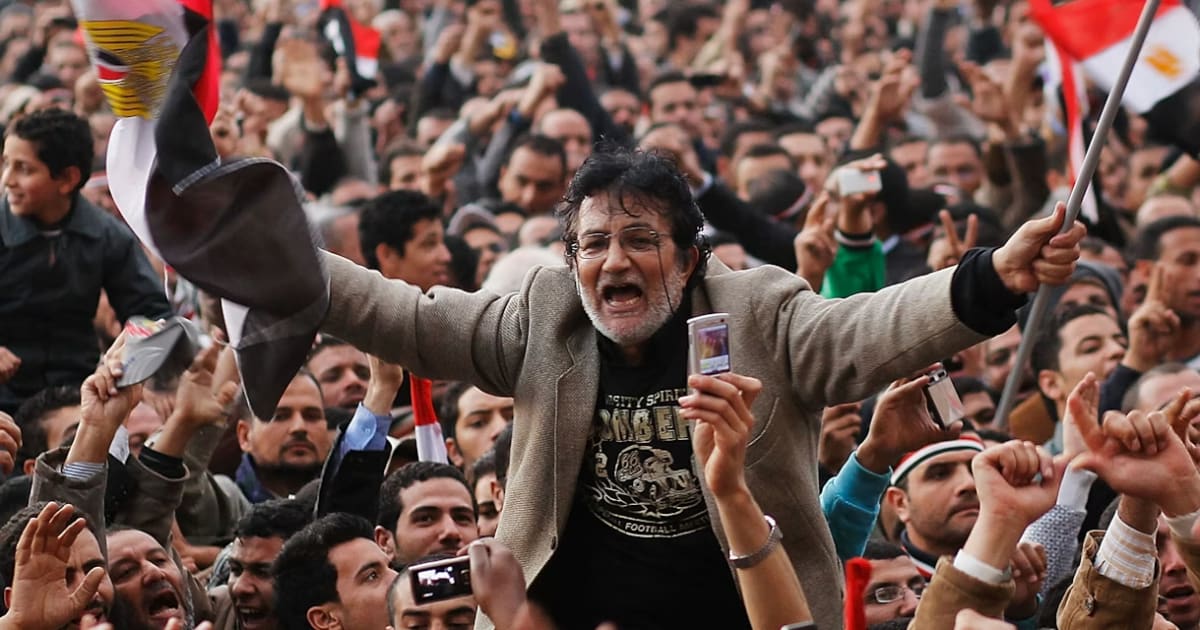
Fifteen years after Egypt’s 2011 uprising, the political goals of the revolution remain contested. But for many young Egyptians who lived through it, the deeper transformation has been personal — particularly in how they understand faith, authority and religious identity.
From Uprising to Uncertainty
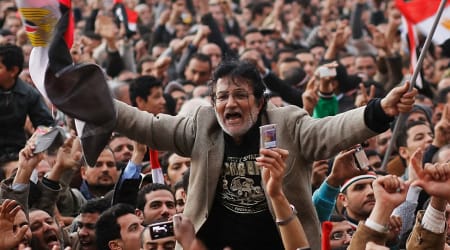
In January 2011, millions of Egyptians filled public squares demanding “bread, freedom and social justice.” The protests ended three decades of rule by Hosni Mubarak, whose government had operated under long-standing emergency laws that curtailed political opposition and civil liberties.
At the time, roughly a quarter of Egyptians were living below the poverty line despite economic growth on paper. Inspired by Tunisia’s successful revolt weeks earlier, Egyptians from diverse religious, economic and social backgrounds mobilised in an unprecedented show of unity. After 18 days of sustained protest, Mubarak stepped down on February 11, 2011.
The moment symbolised collective power. Yet the democratic experiment that followed proved fragile. Elections were held, political parties flourished and public debate expanded — but divisions soon deepened.
Religion at the Center of Public Life
Religion has always played a visible role in Egyptian society. The call to prayer echoes daily across cities and villages, mosques and churches define skylines, and outward expressions of piety — from veiling to beards — are commonplace.
Since the 1970s, scholars have documented a revival of Islamic observance in Egypt, linked in part to movements such as the Muslim Brotherhood and various Salafi groups. These organisations combined religious outreach with social services and political engagement.
Following Mubarak’s fall, Islamist political groups gained significant ground. In 2012, Mohamed Mursi of the Muslim Brotherhood became Egypt’s first democratically elected president. His presidency lasted just one year before he was removed by the military amid mass protests and escalating unrest.
The political turbulence that followed profoundly shaped how many young Egyptians viewed both politics and religion.
A Generation Reconsiders Faith
Between 2018 and 2019, research interviews with 61 Egyptians who were in their early twenties during the revolution revealed a common theme: the uprising created space for questioning — not only of political authority, but also religious authority.
Many participants described 2011 as a turning point. The expanded freedoms of speech and assembly allowed them to critically examine long-held assumptions about faith and practice.
Some moved toward more personalised expressions of spirituality. A number explored Sufism, which emphasises inner experience and mysticism. Others blended Islamic devotion with practices such as meditation and yoga.
One participant, a human rights activist, described removing her veil after the revolution and focusing more on ethical conduct than ritual observance. Another, once religiously conservative, said he came to believe that there is no single path to divine acceptance.
Not everyone embraced these shifts. Some criticised hybrid spiritual practices as inconsistent with Islamic tradition. Debates over authenticity and authority became increasingly common in social and private spaces alike.
A smaller but notable number of interviewees said they had left Islam entirely, identifying instead as atheist or agnostic. Public discussion of nonbelief, once largely hidden, became more visible in the years following 2011.
Political Islam and Disillusionment
For many young Egyptians, it was not religion itself that prompted reassessment — but the way religion was used in politics.
Some religious scholars who had discouraged protests against Mubarak later supported demonstrations against Mursi. Islamist politicians who campaigned on moral integrity were accused by critics of engaging in conventional political maneuvering.
When Mursi was removed from office in 2013 and security forces violently dispersed sit-ins, the country became sharply divided. The events left lasting emotional scars and intensified debates over justice, legitimacy and divine will.
Public opinion data reflects broader change. Surveys conducted over the past decade show growing skepticism about mixing religion with political leadership. By 2022, a significantly larger share of Egyptians expressed opposition to religious figures holding public office compared to 2011.
The Enduring Afterlife of 2011
Economically and politically, many of the revolution’s demands remain unmet. Yet socially, its impact persists.
For the generation that came of age during the uprising, the experience disrupted inherited narratives about authority — whether governmental or religious. It challenged traditional gatekeepers and encouraged individual interpretation.
Fifteen years on, Egypt’s political landscape has stabilised in some respects and hardened in others. But beneath the surface, the revolution continues to echo in quieter transformations: in how young people pray, question, dissent and define belief.
The uprising may not have permanently altered the structure of power — but it reshaped how a generation understands faith and its place in public life.